
Dildos vs Strap-On Toys: Key Differences, Real Use Cases, and How to Choose
When people compare dildos and strap-on toys, they are rarely trying to decide which one is “better.”
More often, they want clarity: how these toys actually differ in design, control, and experience, and which option fits a specific situation, comfort level, or relationship dynamic.
Although the terms are often grouped together, dildos and strap-on toys are built for fundamentally different types of interaction. Understanding those differences helps remove confusion and makes the choice feel intentional rather than experimental.
The Core Difference: Object vs System
At the simplest level, the distinction is structural.
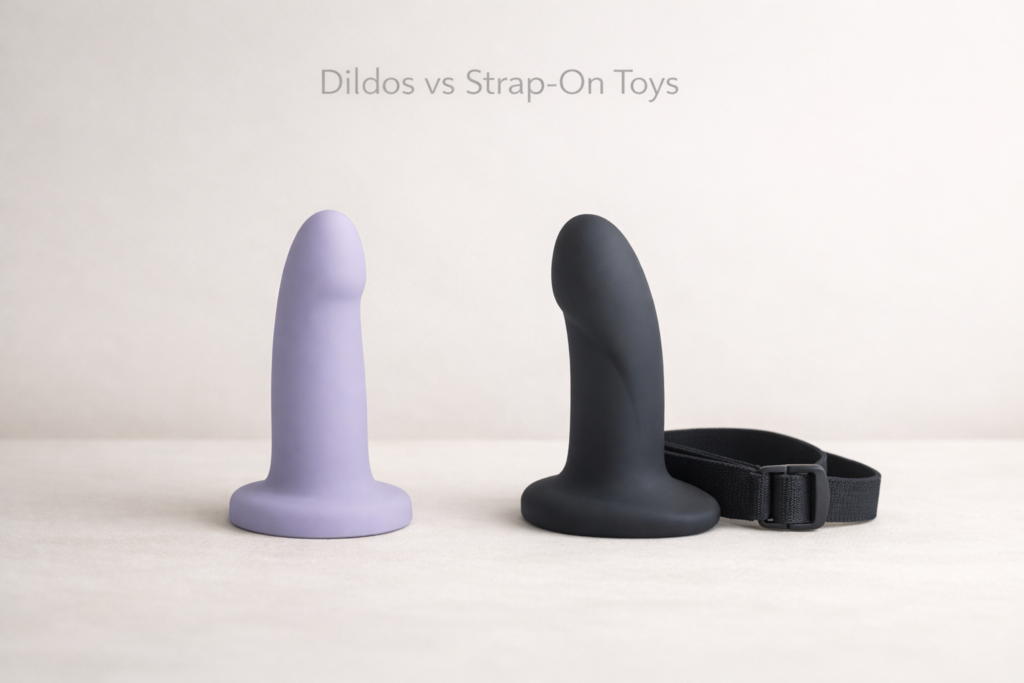
A dildo is a standalone object designed to be held, positioned, or guided manually.
A strap-on toy is a wearable system, usually combining a dildo with a harness or base that allows hands-free use.
This single difference affects everything else: how control works, how movement feels, and who typically uses each option.
How Dildos Are Commonly Used
Simplicity and Direct Control
Dildos are often chosen for their straightforward design. There is no fitting, no assembly, and no learning curve related to wearability. This makes them suitable for both solo exploration and partnered use.
People tend to prefer dildos because they allow:
-
immediate control over angle and pressure
-
easy changes in rhythm or pacing
-
quick transitions between different types of stimulation
-
simple cleaning and storage
Because dildos come in a wide range of shapes, sizes, and firmness levels, many users select them based on sensation rather than mechanics. Curated selections, such as those found at SextoysShop.com, often separate softer, flexible designs from firmer options to help users match comfort preferences without overcomplicating the choice.

Firm vs Flexible Designs
Some people gravitate toward medium to firm silicone dildos because they provide structure and predictable pressure. Others prefer softer models that adapt more easily to movement and positioning, especially during longer sessions or when comfort is a priority.
Neither option is inherently better; the difference lies in how much structure or adaptability someone wants from the toy itself.
What Makes Strap-On Toys Different
Wearability Changes the Experience
Strap-on toys add an extra layer: they are worn rather than held. A typical setup includes:
-
a harness made of fabric, leather, or adjustable straps
-
a compatible dildo or attachment designed to stay stable during movement
Because motion comes from the body instead of the hand, the experience shifts in noticeable ways.
People often choose strap-on toys because they:
-
allow sustained, hands-free movement
-
support partner-led rhythm and positioning
-
create a more immersive, physical interaction
A well-fitted harness plays a critical role here. Comfort, stability, and proper adjustment directly affect how natural the movement feels over time.
Control and Movement: A Practical Comparison
With a Dildo
Control remains manual. This makes it easier to:
-
fine-tune pressure moment by moment
-
pause or change angles instantly
-
focus on precise, localized sensation
Dildos are especially useful when responsiveness and adaptability matter more than continuity.
With a Strap-On Toy
Movement is driven by the wearer’s body. Many users describe this as:
-
more immersive
-
more physically engaging
-
better suited for longer, uninterrupted sessions
Instead of wrist motion, rhythm comes from posture, balance, and shared coordination.
Which Option Works Better for Beginners?
There is no universal “starter” toy, but patterns do emerge.
| Aspect | Dildos | Strap-On Toys |
|---|---|---|
| Setup | No setup required | Requires harness fitting |
| Ease of control | Very intuitive | Takes some body awareness |
| Learning curve | Short | Slightly longer |
| Use context | Solo or partnered | Primarily partnered |
| Comfort factors | Depends on shape and material | Depends on harness fit and positioning |
Many beginners start with a dildo to understand their preferences for size, firmness, and sensation. Strap-on systems often come later, once there is more confidence with movement, communication, and physical coordination.
That said, beginners who value shared, hands-free interaction can still enjoy strap-on toys, especially when choosing adjustable harnesses and softer materials.
Dildos vs Strap-On Toys in Relationships
For couples, the decision often reflects how they prefer to interact rather than what they are curious about.
| Aspect | Dildos | Strap-On Toys |
|---|---|---|
| Interaction style | Hand-guided | Body-led |
| Control | Manual and flexible | Shared and continuous |
| Role switching | Quick and easy | Depends on setup |
| Hands-free use | No | Yes |
| Rhythm | Highly adjustable | Steady and immersive |
Dildos support variation and spontaneity. Strap-on toys support continuity and shared movement. Many couples use both, depending on mood, energy, and the kind of connection they want to explore in that moment.
How to Decide Between a Dildo and a Strap-On Toy
Instead of asking which one is better, it helps to ask:
-
Do I want hands-on precision or body-led immersion?
-
Is flexibility or continuity more important right now?
-
Am I exploring solo, with a partner, or both?
When products are clearly categorized by design and intent, the choice becomes more intuitive and less overwhelming.
Final Perspective
Dildos and strap-on toys are not interchangeable, and they are not competitors.
Dildos offer simplicity, adaptability, and direct control.
Strap-on toys offer immersion, shared rhythm, and hands-free engagement.
Understanding what each tool is designed to support makes the decision less about guessing and more about choosing what fits your needs in a specific context.